
The head of Linck Child, Youth, and Family Supports in Chatham-Kent (CK) says a provincial funding crisis for children with complex needs has hit close to home.
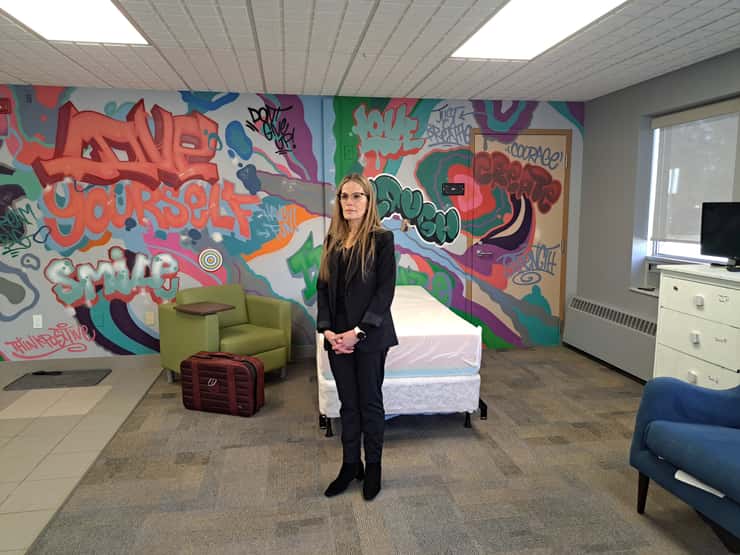
Linck Executive Director Teri Thomas-Vanos said she had to use her office building in Chatham to shelter at least six youth over the past four years who needed extra care to deal with their developmental, behavioural, or mental health issues because their families could no longer accommodate them.
Thomas-Vanos told reporters on Thursday that CK children who need aid are getting younger and more resources are required to ease the crisis.
She noted two youths had to stay in a makeshift room in the building, with a bed and some scarce furniture, adding that one other even had to sleep in a trailer for a few weeks.
According to Thomas-Vanos, a 10-year-old stayed at the building last year for over 10 months, while a 7-year-old resided there for four months this year.
"It's not a home. It's not a place to raise a child, and because of our legislated responsibility to provide child protection services, it has become our responsibility," said Thomas-Vanos.
The Ontario Ombudsman is investigating the practice of child welfare agencies placing youth in hotels, motels, offices, and trailers.
Thomas-Vanos said the children need treatment closer to home, and Linck needs more resources, such as a larger building, more foster parents, and more funding.
"What they really need is an intensive period of treatment. They might need medication, they need assessment, they need a very structured routine and consistent approach to help them regain their wellness and get stabilized again," she added.
The nearest residential children's treatment facility is in London.
Thomas-Vanos noted that treatment usually results in children returning home to their families, and admits the last four years have been gruelling for her staff.
"Being able to capitalize on those connections, whether that's family, kin, culture, identity, or community. Having all of those protective factors wrapped around them in their home environment is the best-case scenario," Thomas-Vanos noted.
She added that Linck currently has a $3 million budget deficit and is being audited by the province.
Vanos also said Linck has taken some steps to solve the problem locally with its Foundation buying a house in Blenheim for temporary youth stays and by working on a tiny homes proposal with Ryan Donais, a former CK resident who previously received aid from Linck.
The Ministry of Children, Community and Social Services says the provincial government will continue to work with partners to deliver high-quality services that prioritize safety, protection, and the needs of children, youth, and families to ensure that every child and youth in the province is supported and protected.
“Every child deserves a safe, loving, and stable home, and to have the resources and supports they need to achieve lifelong success. That is why our government is improving the child welfare system to focus on high-quality services that provide safety and protection for all children and their families," said a ministry spokesperson, adding the province has invested more than $1.7 billion in child welfare services, an increase of over $350 million since 2018.
The ministry added an additional $41.7 million per year in child welfare has been budgeted to address increasing operational costs for community organizations that support vulnerable people across Ontario.
"To enhance oversight of child welfare services, our government has established requirements to implement the Quality Standards Framework, to ensure that societies complete a pre-placement assessment, a safety assessment, and a plan, as well as a plan of care for the child," noted the ministry. "Plans of care must include identifying the child’s needs and any required specialized services or treatment, including mental health support."
The ministry also noted additional changes that took effect January 1, 2025, further enhance the oversight of children in society care to ensure the well-being of youth in all placement settings.
The ministry said the changes require societies to visit with each child in their care at least once every 30 days, compared to the previous 90-day requirement, and conduct unannounced visits if there are concerns about the child’s safety and well-being.