An inquest into the death of a Chatham-Kent man has come to an end with several recommendations aimed at preventing similar deaths.
For six days, a jury heard from witnesses about the circumstances surrounding the passing of Thomas Humphrey.
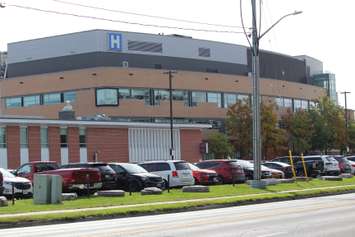
The 35-year-old died in 2019 at the Chatham-Kent Health Alliance (CKHA) following an interaction with officers from the Chatham-Kent Police Service (CKPS).
During opening statements, it was shared that Humphrey began shaking and foaming at the mouth after taking a shower. He was transported to the hospital, where he was handcuffed to a gurney and restrained by officers. He later passed away.
After deliberating, the jury ruled that Humphrey had died from methamphetamine toxicity. They also declared it an accident, placing no blame on any of the police officers.
The jury also presented 10 recommendations to help prevent someone from dying in the same circumstances as Humphrey.
Chatham-Kent Emergency Medical Services (CKEMS) should collaborate with municipal and provincial governments, as appropriate, to assess the need for integrating Advanced Care Paramedics into their provision of emergency medical services, considering provincial regulation and standards.
CKEMS should build upon and strengthen critical incident debriefing and trauma-informed supports to its paramedics promptly following a traumatic incident. Any debriefing should be respectful of investigations and legal processes that may follow the event. Debriefing should be used for potential future training and improvement of services - possibly added to bulletins/bullet point announcements made available to all staff of CKEMS. Documentation from debriefs can add additional information to the record of cases kept in the call logs (types of care, types of calls, indicators for the types of responses that may be needed).
CKPS should ensure that annual use of force training addresses various circumstances and the associated risks of the application of force to an individual's head and neck area, including the use of pressure points. Such training should include instruction about circumstances that may limit the options for use of force to the head and neck area. The training should include the idea that the use of force in the head/neck area should be excluded in cases where the person to whom force is being applied is experiencing severe agitation in a medical situation.
The Ontario Police College (OPC) should explore the possibility of creating a simulation based on the events of this inquest, where officers are interacting with EMS and hospital staff in a severe medical situation.
OPC should explore revisions to the mandibular angle technique training to address limitations to modifications to the technique.
CKPS should review and consider the evidence heard at this inquest, and any material in its possession relating to Thomas Humphrey's death, with a view to considering policy and training improvements.
CKPS, CKEMS, and the CKHA should establish and maintain an ongoing process of collaboration to develop, implement, and periodically review a framework outlining their respective roles and responsibilities when addressing a person experiencing severe agitation.
CKPS should review and revise its policies with respect of the use of the term "Excited Delirium" to ensure that terminology and guidance is consistent with the latest understandings of persons experiencing severe agitation.
In regards to "Excited Delirium", an appropriate term should be determined, including reasonable criteria for understanding what symptoms are considered to be a part of that terminology.
In the event of an emergency medical situation, time is crucial. In an effort for medical service providers to have the most time possible, the jury would like more awareness raised around the Good Samaritan Act. The act allows "amnesty" for a friend who may have ingested an illicit substance and calls for help on behalf of a friend who also may have ingested a similar substance when they see that they are in medical distress. It's recommended that this could be done in similar ways as other public health awareness initiatives, including Narcan awareness - through health outlets, hospitals, pharmacies, schools, addiction treatment centres and/or an awareness campaign through the media.