

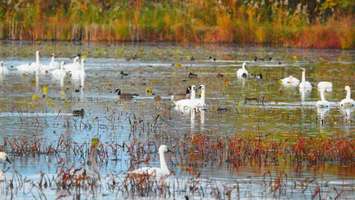
One of the few coastal wetlands remaining on Lake St. Clair is now protected for waterfowl and other wildlife.
On Wednesday, Ducks Unlimited Canada announced the purchase of St. Luke's Marsh, just south of Mitchell's Bay, to ensure the critical habitats for bird migration continue. St. Luke’s Marsh is 488 acres and includes coastal shoreline, provincially significant coastal wetlands, and other mixed wildlife habitats. The marsh is next to the publicly owned, 882-acre St. Clair National Wildlife Area, which Ducks Unlimited said shelters more than 60 species of birds and 35 federally listed species at risk such as the king rail, the least bittern and the eastern fox snake. These habitats also support migrating monarch butterflies.
Ducks Unlimited Canada research shows that all but 1.5 per cent of wetland habitats around the lake have been converted to other land uses. Lake St. Clair connects Lake Huron and Lake Erie and receives waters from major rivers, including the St. Clair River, Thames River, Sydenham River and Clinton River which then pass to Lake Erie, making the health of this lake an important ecological goal for both Canada and the United States, according to Ducks Unlimited.
The purchase of St. Luke’s Marsh supports Canada’s target of conserving 25 per cent of Canada’s lands by 2025 and its objectives for the recovery of wild species listed under the federal Species at Risk Act. St. Luke’s Marsh is one of 22 conservation properties held by Ducks Unlimited Canada within the Great Lakes watershed, accounting for almost 7,000 acres of protected habitat.
“Years of effort are behind this conservation success. Protecting a wetland as significant as St. Luke’s Marsh is deeply rewarding, and it’s only possible with committed partners and supporters whose vision for a healthy future matches ours, to protect and restore waterfowl habitats which are part of the natural infrastructure that underpins Ontario’s working landscape,” said Karla Guyn, CEO, Ducks Unlimited Canada.