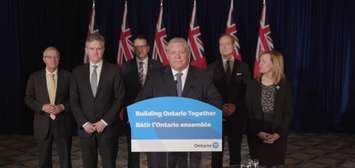
Ontario Premier Doug Ford is declaring a state of emergency in response to the COVID-19 pandemic.
It will be in effect until March 31, 2020.
The declaration means the province is now banning organized events of 50 or more people and closing the following:
• Facilities providing recreational programs • Libraries • Private Schools • Licensed child care centres • Bars and restaurants (takeout and delivery permitted) • Theatres, cinemas and concert venues
The premier also announced on Tuesday the first stage of a COVID-19 Emergency Relief Package, which will commit over $304 million to more beds, assessment centres, medical supplies, and ensure resources for northern, rural and remote communities.
The premier said the province is using every power possible to continue to protect the health and safety of all individuals and families.
"We are facing an unprecedented time in our history," said Premier Ford. "This is a decision that was not made lightly. COVID-19 constitutes a danger of major proportions. We are taking this extraordinary measure because we must offer our full support and every power possible to help our health care sector fight the spread of COVID-19. The health and well-being of every Ontarian must be our number one priority."
The province also announced all organized public events of over 50 people are prohibited, including parades and events and communal services within places of worship. These orders were approved by the Lieutenant Governor in Council and will be reassessed March 31 and considered for extension, unless this order is terminated earlier.
"We are acting on the best advice of our Chief Medical Officer of Health and other leading public health officials across the province," said Christine Elliott, Deputy Premier and Minister of Health. "We know these measures will affect people's every day lives, but they are necessary to ensure that we can slow the spread of COVID-19 and protect our people. We're working with all partners across the system, from public health to hospitals and community care, to do everything we can to contain this virus and ensure that the system is prepared to respond to any scenario."
Premier Ford insists this is not a provincial shutdown. He said grocery stores, pharmacies, gas stations, manufacturing facilities, and office buildings with over 50 workers will stay open so as not to affect the supply chain.
Ford said he didn't make the decision on Monday because further cabinet discussions had to take place. Ontario's Chief Medical Officer of Health said the province had to talk with other provinces to coordinate efforts.
Here's a break down of the money:
- $100 million for increased capacity in hospitals to assist with the effective treatment of COVID-19 patients both in critical care and medicine beds.
- $50 million for more testing and screening through public health, including additional funding to support extraordinary costs incurred to monitor, detect and contain COVID-19 in the province. This includes contact tracing, increased laboratory testing capacity and home testing.
- $50 million to further protect frontline workers, first responders and patients by increasing the supply of personal protective equipment and other critical supplies and equipment to protect them.
- $25 million to support frontline workers working in COVID-19 assessment centres, including the creation of a new fund to provide respite care, child care services and other supports as they are needed.
- $50 million for long-term care homes;to support 24/7 screening, additional staffing to support infection control and additional supplies.
- $20 million for residential facilities in developmental services, gender-based services and protective care for children and youth to support additional staffing, respite for caregivers impacted by school closures, personal protective equipment and supplies and transportation costs to minimize client exposure and to support social distancing, as well as additional cleaning costs.
- $5 million to protect seniors in retirement homes through increased infection control and active screening procedures.
- $4 million for Indigenous communities to support transportation costs for health care professionals and the distribution of critical supplies.
https://www.youtube.com/watch?v=mMVlMd0M6Rk
During an announcement on Monday, Ford unveiled new measures to protect workers forced into self-isolation during the COVID-19 pandemic.