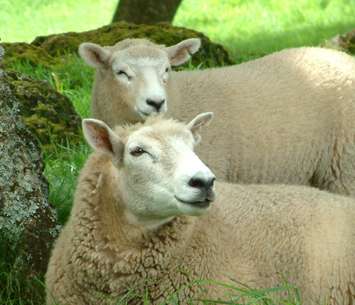
A recent workshop was designed to raise the level of awareness about controlling diseases and reducing risks in sheep.
Doctor Bruce Robinson was the key speaker in that workshop.
He says the pork and poultry sectors are very good at biosecurity.
Cattle, sheep and goat producers, he says, have been traditionally less bio-secure.
Doctor Robinson points out that sheep producers are usually dealing with a smaller number of animals and tend to have more individual contact with them.
He says that gives them an advantage in being able to spot disease problems quickly.
Doctor Robinson says producers can't expect to prevent every risk - but suggests there are a lot of things that can be done that are often not that expensive.
His key word of advice to sheep producers on biosecurity is to be aware of the potential for diseases and what's going on in your flock.
===
Doctor Bruce Robinson says part of biosecurity is reducing the risk of visitors bringing in foreign diseases.
[audio mp3="http://blackburnnews.com/wp-content/uploads/2014/12/ROBINSON-Sheep-31.mp3"][/audio]
===
Doctor Robinson says cattle, sheep and goat producers haven't been as conscious about controlling exposure as some other livestock sectors.
[audio mp3="http://blackburnnews.com/wp-content/uploads/2014/12/ROBINSON-Sheep-2.mp3"][/audio]
===
Doctor Robinson says the unique nature of sheep farms helps in dealing with diseases.
[audio mp3="http://blackburnnews.com/wp-content/uploads/2014/12/ROBINSON-Sheep-3.mp3"][/audio]