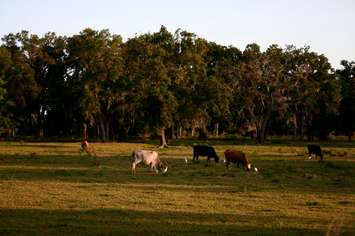
OMAFRA Pastures Specialist Jack Kyle says 2014 was a year that showed the benefits of rotational grazing.
Kyle's seasonal summary for pastures says rotational grazing showed improved grass growth, better quality grass throughout the season and improved animal performance this year over a set stock grazing system.
He says it works best when livestock are rotated to fresh grass every 1-3 days and the grazed pasture is given enough time to fully recover before re-grazing.
The ministry says the abundance of moisture this year mean excellent grass growth.
However, that grass had a high moisture content - meaning livestock didn't perform as well as expected.
The number of cloudy days over the summer also helped reduce the sugar content in the pasture plants.
Kyle says producers are showing some interest in grazing alfalfa stands.
With careful management he thinks the risk of bloat can be reduced or eliminated.
He calls gains on stockers on alfalfa 'very remarkable'.
Kyle says alfalfa also has the benefit of reasonably good mid- to late-summer growth, when most grass species are not growing very much.
===
Ontario Field Crop Report November, 2014
Seasonal Summary for Pastures: Jack Kyle Abundant moisture during the 2014 growing season affected pasture growth and animal performance on pasture. The abundance of moisture meant excellent grass growth but with a high moisture content which meant that livestock did not perform as well as expected. The high moisture levels were accompanied by reduced sunlight due to cloudy days which further reduced the sugar content in the pasture plants. The high rainfall resulted in wet soils which were prone to pugging especially in higher traffic areas. Pastures that were frost seeded in late winter or early spring had good establishment of new seedlings – one of the benefits of a year with above average moisture.
2014 was a year that showed the benefits of rotational grazing with improved grass growth, better quality grass throughout the grazing season, improved nutrient cycling and improved animal performance over a set stock grazing system. In a rotational grazing system, a well-managed pasture will be very productive provided livestock are rotated to fresh grass every 1-3 days and allowing the grazed pasture adequate time for full recovery before re-grazing.
Producers continue to utilize annual crops in their grazing strategies. Cereal rye planted in the fall of 2013 provided excellent early season grazing. Mid summer seeding of spring cereals, brassicas and sorghum sudan grass provided late summer through fall grazing. Producers are also finding the flexibility of grazing standing corn (August – December) to be very advantageous.
Cover crops are proving to be a good source of late season grazing. There has been some interest in grazing alfalfa stands. With careful management the risk of bloat can be reduced or eliminated and gains on stockers are very remarkable. Alfalfa has the added benefit of reasonably good mid to late summer growth when most grass species are not growing very much.
Stockpiled perennial pastures, cover crops and corn stover will continue to be grazed until snow depth restricts access. The opportunities to extend the grazing season translates into significant reduction in feed costs.
The Publication “Pasture Production” can be viewed or purchased at: www.ontario.ca/bjay