

The Municipality of Chatham-Kent says the new Chatham-Kent (CK) Community Hub in downtown Chatham is progressing nicely.
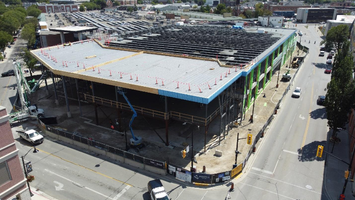
In an update report going to CK council on Monday night, administration said the project is on budget and is 28 per cent complete, with no known delays.
The building's north extension, which will house the council chambers, and the library extension and storage area to the south are now complete, according to the municipality.
"With all structural steel now complete, the building is taking on its full form as the building moves into the next phase of construction," staff said.
Administration said work continues to finish the outside of the building, electrical, plumbing, and mechanical systems inside, and on the elevator structures, utility infrastructure, and interior building systems.
Mechanical and framing work also continues with ductwork, interior structural steel, mechanical and electrical rough-ins, fireproofing, concrete cutting and coring, metal stud framing on the first and second floors, and roofing, said officials.
Administration noted the next stages of the project include roofing, masonry stair construction, freight elevator refurbishment, spray foam insulation, and slab-on-grade concrete placement.
According to the update report, the construction of the building came in $3.6 million under budget at $39,280,323 with $3.4 million still set aside in contingency funds for the unexpected.
Staff maintained the overall project budget remains at $52.8 million, including over $7 million of contingency funds that are "best practice" for a project of this size.
The new community hub is scheduled to be completed in early 2028. Staff said detailed transition planning is underway and will be communicated in mid 2027.
The new hub will bring the Chatham Civic Centre, Chatham library branch, and the Chatham-Kent museum under one roof in downtown Chatham.
The municipality said it replaces aging facilities, reduces long-term infrastructure costs, and will not burden taxpayers with any new property tax increases, as the project is being funded through a combination of property sales, existing reserves, and long-term financing within the municipality’s existing budget.